
TCL P8L explained is one of the easiest TCL TVs in the 2026 range to misread. It is not the flashy halo model, and it is not one of the sets carrying TCL’s louder Super QD or RGB Mini LED story. What makes the P8L interesting is something much more practical: it brings QD-Mini LED, Google TV, up to 144Hz, and very large screen options into a more affordable part of the lineup. And for a lot of real buyers, that may matter more than the models getting all the headlines.
That matters because TCL’s 2026 lineup is more layered than usual. Above the P8L, TCL is pushing more premium Super QD families and newer RGB Mini LED models. The P8L sits below those branches as the more grounded Mini LED option: still modern, still gaming-friendly, but easier to justify if you want a serious TV without paying for TCL’s most experimental or most aggressively marketed sets.
TCL P8L explained — quick buyer table
| Model family | Display path | Smart platform | Refresh story | Best fit |
|---|---|---|---|---|
| P8L | QD-Mini LED | Google TV | Up to 144Hz | Buyers who want Mini LED value without paying for TCL’s upper premium tiers |
| C7L / QM7L | Super QD Mini LED | Google TV | Higher-tier premium positioning | Buyers who want a more advanced TCL step-up model |
| C8L / QM8L | Super QD Mini LED | Google TV | Premium mainstream sweet-spot positioning | Buyers who want more than P8L without going all the way to the halo tier |
| RM7L / RM9L | RGB Mini LED | Varies by rollout | Newer tech direction | Buyers chasing TCL’s boldest LCD path |
P8L is not the technology showcase. It is the value bridge.
What TCL P8L actually is
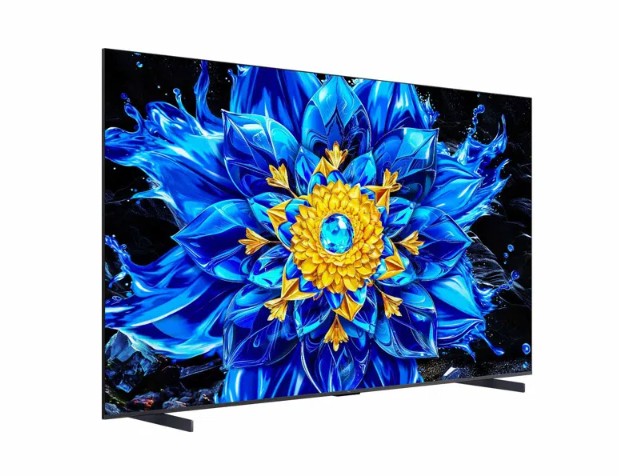
The safest way to understand the P8L is this: it is a Premium QD-Mini LED TV in TCL’s own wording, built around Google TV, up to 512 dimming zones on the 98-inch model, 144Hz native refresh rate, ONKYO 2.1 audio, and TCL’s branded AiPQ Pro Processor. That already tells you what role it plays. This is not meant to be the boldest TCL of the year. It is meant to be a more attainable Mini LED option that still sounds current in 2026.
The processor point matters because TCL’s official messaging uses the AiPQ Pro Processor name, while widely used technical listings point to a MediaTek Pentonic 700 (MT9653) platform for P8L models. The cleanest and safest way to present that in the article is to treat AiPQ Pro as TCL’s branded processing layer and Pentonic 700 as the underlying SoC platform currently listed for the set.
TCL P8L explained for buyers confused by the 2026 TCL hierarchy
This is where the lineup can become messy.
At the top of the 2026 conversation, TCL wants buyers to notice the more advanced Super QD story and the newer RGB Mini LED direction. P8L sits below those lines. That does not make it unimportant. It makes it easier to understand. P8L should be read as the Mini LED value point in the lineup: the model for buyers who still want better contrast control and more serious gaming support than a simpler QLED, but who do not need TCL’s louder premium branches.
The practical hierarchy
P8L = Mini LED value point
C7L / QM7L = premium step-up
C8L / QM8L = stronger premium sweet spot
RM7L / RM9L = newer RGB Mini LED direction
That is why P8L matters. It gives TCL a more realistic Mini LED entry into the conversation for buyers who want something modern but not necessarily the most hyped model in the catalog.
TCL P8L explained for gamers
P8L is clearly meant to sound serious for gaming, and on paper it does enough to justify that. TCL highlights 144Hz native refresh rate and says the signal path supports 4K 144Hz, while also noting that 288 VRR Game Accelerator is achievable through HDMI 1 and 2. That one note is important because it immediately tells you the high-refresh story is not identical across all four HDMI inputs.
This is exactly where the earlier 4x HDMI 2.1 phrasing needed correction. Current technical listings and coverage point to 4 HDMI ports total, but specifically 2x HDMI 2.1 and 2x HDMI 2.0, not four full HDMI 2.1 ports. That makes the P8L a capable gaming TV, but not one you should describe as having fully unrestricted flagship-style connectivity.
Core specs + manufacturer positioning vs rounded real-world expectations
| Category | TCL P8L |
|---|---|
| Panel / backlight | QD-Mini LED LCD |
| Resolution | 4K |
| Smart platform | Google TV |
| Processor | TCL AiPQ Pro Processor on a widely listed MediaTek Pentonic 700 (MT9653) platform |
| Sizes | 55, 65, 75, 85, 98 inch |
| Max refresh | Up to 144Hz |
| Gaming features | VRR, ALLM, Game Master features |
| HDMI layout | 4 HDMI total, including 2x HDMI 2.1 and 2x HDMI 2.0 |
| HDR formats | Dolby Vision, HDR10+, HLG |
| Manufacturer positioning | Premium Mini LED value model below TCL’s more advanced 2026 branches |
| Rounded real-world expectation | Better contrast and HDR control than simpler QLED tiers, but not the same prestige or expectation level as TCL’s Super QD and RGB Mini LED models |
That is the right way to frame it. P8L should not be sold as a flagship killer. It should be sold as a useful Mini LED step-up for buyers who want a modern TCL without climbing the whole 2026 ladder.
Port-by-port I/O map
| Port / feature | TCL P8L | Why it matters |
|---|---|---|
| HDMI 1 | HDMI 2.1 | One of the key ports for 4K high-refresh gaming |
| HDMI 2 | HDMI 2.1 | The other key high-refresh gaming port |
| HDMI 3 | HDMI 2.0 | Better for streamer, cable box, or secondary device |
| HDMI 4 | HDMI 2.0 | Better for extra playback gear than for your main gaming source |
| Total HDMI | 4 ports | Enough for most homes, but less flexible than 4x HDMI 2.1 sets |
| USB | USB connectivity | Media playback and accessories |
| Ethernet | Yes | Better stability for heavy streaming homes |
| Wireless | Wi-Fi + Bluetooth | Standard smart TV convenience |
Menu names may vary by region or firmware, but the practical message is simple: use HDMI 1 or 2 for the strongest gaming path and do not treat the P8L like a four-port flagship gaming TV.
Brightness, dimming, and why P8L is not the same story as RM9L
P8L uses QD-Mini LED with local dimming, and TCL highlights up to 512 zones on the 98-inch variant. That gives it a more serious HDR and contrast story than a simpler QLED, but it is still not the same kind of technology pitch as TCL’s newer RGB Mini LED branch. That is the important line to keep clear. P8L is the more grounded Mini LED value option. RGB Mini LED is the bolder, newer, and more experimental direction.
This is also why the P8L may be easier to recommend to ordinary buyers. It asks you to buy a TV, not a technology argument.
What actually makes P8L attractive
P8L is attractive because it brings Mini LED lower into the lineup, while still sounding modern for mixed use. It gives buyers Google TV, high refresh support, ONKYO 2.1 audio, and large sizes including 98 inches, without forcing them into TCL’s more premium 2026 branches. For many households, that is a much more realistic buying proposition than chasing the loudest launch of the year.
It also avoids some of the first-wave pressure that comes with newer, more experimental technology stories. That may not sound glamorous, but it is often exactly what makes a TV easier to recommend.
Common mistakes buyers could make
Assuming P8L is just another basic P-series TV
It is more serious than that because it brings Mini LED, 144Hz, and gaming-friendly features into the conversation.
Assuming it is equivalent to TCL’s top 2026 branches
It is not. That is part of its appeal, not a weakness. The P8L is meant to be the more grounded Mini LED option.
Ignoring the HDMI split
This is the big one. It has 4 HDMI ports, but only 2 are HDMI 2.1, so setup planning matters.
Buying only on the 144Hz label
That matters, but the input layout and broader panel class still matter too.
Who should buy TCL P8L?
Buy P8L if…
you want a TCL Mini LED without paying for the upper premium tiers, you care about gaming features but still want value, and you want a large-screen TV with a stronger backlight story than a simpler QLED.
Skip P8L if…
you specifically want TCL’s newest and most ambitious 2026 technology story, or you want a more premium tier with a more aggressive panel and connectivity pitch.
Final Verdict
TCL P8L explained becomes simple once you stop expecting it to be everything at once. It is not TCL’s halo TV. It is not the most experimental branch of the lineup. And that is exactly why it may end up being one of the more useful models in the range.
For buyers who want Mini LED, Google TV, real gaming features, and big-screen options without climbing into TCL’s louder premium tiers, the P8L makes a lot of sense. It sits in the lineup like a pressure-release valve: modern enough to feel exciting, grounded enough to feel practical.
And in a year where TV launches keep getting bigger, brighter, and more confusing, that kind of clarity still has value. ✨
Internal links
- TCL 2026 TV lineup explained
- TCL X11L SQD-Mini LED TV
- TCL Android 14 update: what it changes, who gets it, and how to install it safely
- TCL P8L vs Hisense U7SE, LG QNED85B and Samsung QN80H — which 65-inch TV wins?
Still deciding between TCL’s value and premium Mini LED tiers? Read our TCL P8L vs C7L comparison to see which model offers the better balance of brightness, gaming and price.