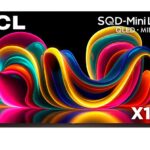
Hisense RGB MiniLED evo TV is Hisense’s next step after last year’s “RGB MiniLED” debut: instead of keeping the tech locked to ultra-expensive, ultra-huge flagships, it’s now spreading the concept into a broader lineup — while adding a fourth backlight color (Sky Blue–Cyan) to improve gradients and color precision.
The result is a set of CES-announced TVs that aim at two different buyers:
- people who want a massive flagship (116-inch class), maximum spectacle, maximum “wow” ✅
- people who want RGB-style color performance in normal living-room sizes (55–100 inches) without paying flagship-only prices
Menu names/paths vary by model/region/firmware.
Quick Takeaways
- Hisense’s big CES headline is RGB MiniLED evo: it adds an industry-first Sky Blue–Cyan 4th LED to the backlight for more natural gradients and less “oversaturated neon” look in bright HDR. 🌈
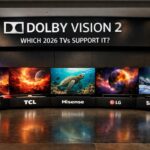
- Hisense is also pushing Dolby Vision 2 support on select 2026 models (with notes that DV2 may land via firmware depending on region).
- The “mass-market” RGB sets are the UR8S / UR9S series, scaled to 55–100 inches, with up to 180Hz input support (PC-focused) and an all-new slim unibody design. 🎮
- The tech story hinges on a dual-chip architecture plus a new RGB-focused processing stack (often referenced as Hi-View AI Engine RGB).
Hisense RGB MiniLED evo TV lineup (what was shown and how it splits)
Here’s the cleanest way to understand what Hisense is doing:
| Tier | Model family | What it is | Who it’s for |
|---|---|---|---|
| Flagship “statement” | 116UXS (UX series) | 116-inch RGB MiniLED evo with cyan 4th LED and the most aggressive color targets | Bright-room cinema, showpiece installs |
| Premium “living-room sizes” | UR9S / UR8S (UR series) | RGB miniLED scaled to 55–100 inches with new design + high refresh | People who want top HDR punch + better color volume without 116-inch pricing |
| Ultra-high-end tech halo | RGBY MicroLED (e.g., 163-inch class demos) | A separate MicroLED direction (not LCD mini-LED), adding yellow for warmer tones | Luxury installs, “future tech” showcase |
The important note: RGB MiniLED evo (LCD + RGB backlight) and RGBY MicroLED (true MicroLED) are not the same category. One is a premium LCD tech path; the other is an ultra-high-end, no-LCD MicroLED path.
Design & Build Quality
Hisense is leaning into a more modern “premium slab” look for the UR series this time — a streamlined unibody design reported as being as slim as ~45mm in some regional materials. That matters because dense mini-LED backlights often get chunky fast.
For the 116-inch flagship, design decisions are more about structural stiffness, thermal headroom, and anti-reflection behavior than about being razor thin. If a TV this bright catches window reflections, it loses half the battle.
Panel Technology Explained
What RGB MiniLED was (2025) — and why it was limited
Last year’s RGB miniLED approach was basically: use red + green + blue LEDs in the backlight system to increase color volume and reduce reliance on filtering. It was impressive — but expensive, and mostly tied to very large sizes.
What RGB MiniLED evo adds (2026): Sky Blue–Cyan LED
The “evo” upgrade adds a Sky Blue–Cyan 4th LED, which sits in a part of the spectrum where the human eye is extremely sensitive to subtle shifts. Practically, that should show up as:
- smoother skies, water, and bright gradients (less banding / less “posterization”)
- more natural skin transitions under HDR highlights
- fewer moments where high saturation looks “painted on” rather than lit from within
Hisense pairs this with a tighter control story: it’s not only about “more colors,” but about wavelength-level precision and control logic that coordinates brightness + chroma changes scene by scene.
Brightness & HDR Performance
Hisense’s CES messaging is heavily focused on “color performance at high luminance,” not just raw peak nits. The 116UX-class RGB flagships are generally positioned as extremely bright displays, but what the audience will care about is:
- highlight stability (does the TV keep specular highlights crisp without pumping?)
- blooming control (how clean are subtitles and small bright objects?)
- anti-reflection (does the image stay punchy in a bright room?)
Manufacturer claims vs rounded independent measurements
Because these are brand-new models, retail measurements will vary by:
- picture mode (accurate modes vs vivid retail modes)
- APL / window size
- panel variance
- firmware changes over the first months
So the honest way to present numbers today is to separate claims from what we will fill in later.
| Metric | Hisense claim / positioning | Rounded independent measurements (accurate modes) |
|---|---|---|
| Color gamut (RGB MiniLED evo) | Up to 110% BT.2020 (claim, tech headline) | TBD (depends on method and mode) |
| Color control depth | 134-bit control (claimed) | TBD |
| Dimming behavior | “tens of thousands” referenced for flagship class in some coverage | TBD (algorithm + zone structure matter more than raw count) |
Methodology note: when we update this later, we’ll use rounded measurements from accurate picture modes, and we’ll call out that firmware/panel variance can shift results.
Color Accuracy & Picture Processing
Hisense RGB processing stack: what’s new
Hisense’s RGB push comes with an RGB-specific processing emphasis, often referenced as Hi-View AI Engine RGB. The big idea is simple: if you add more backlight color capability, your video processing must become more precise in how it maps content to the panel.
In practice, this processing layer is what decides:
- whether gradients look smooth or chunky
- whether bright colors look “neon” or natural
- whether tone mapping preserves detail in highlights
If you’ve ever seen a very bright mini-LED TV that looks stunning on demo loops but harsh on real movies, that’s usually a processing/tone-mapping calibration problem — not a pure hardware problem.
✅
Dolby Vision 2 angle (and why it matters)
Hisense is positioning 2026 models as early supporters of Dolby Vision 2. The practical consequence is future format compatibility — but the immediate reality is that content availability will take time, and some implementations may require firmware updates.
For SEO, though, this is gold: people will search “Dolby Vision 2 TV” the moment they hear the phrase, and they’ll want a simple “which models actually support it” answer.
Motion Handling & Refresh Rates
Hisense is calling out up to 180Hz capability on UR-series RGB miniLED models (noting that this is most relevant for PC; consoles still top out at 4K/120). 🎮
What you want to watch on real retail units:
- whether local dimming stays stable with VRR
- whether motion interpolation is controlled (sports) without artifacts
- whether 120Hz gaming stays clean without black crush
Gaming Performance
If Hisense executes the fundamentals, these RGB miniLED sets should be excellent “bright-room gaming” TVs:
- high peak brightness helps HDR games look punchier
- high refresh supports PC use cases
- broad HDR format support reduces platform friction (some users live in Dolby Vision gaming workflows)
The make-or-break details will be the usual:
- input lag in Game Mode
- VRR + local dimming interaction
- consistent tone mapping under real gameplay (not just demo reels)
Smart Platform & UX
Hisense’s platform story varies by region. In Europe, many models lean on VIDAA, and Hisense has been talking about platform evolution (including deeper AI services and home integration).
Bottom line :
- app availability can vary by region
- firmware updates can change key behaviors (HDR tone mapping, local dimming aggressiveness, gaming settings)
Audio & Connectivity
“Tuned audio” in the 2026 story
Some UR/U-series models are described with Devialet-tuned sound branding in regional coverage, and the flagship UX tier is positioned as cinematic with multi-channel intent. Treat audio branding as region/series dependent.
Port-by-port I/O map (what we can say clearly right now)
Hisense’s CES coverage is more detailed for UR8S/UR9S than for the 116UXS in terms of ports:
| Model family | HDMI 2.1 | USB-C | Notes |
|---|---|---|---|
| UR8S | 4× HDMI 2.1 | — | Built for multi-device gamers |
| UR9S | 3× HDMI 2.1 | 1× USB-C | USB-C includes DisplayPort + power delivery (per coverage) |
| 116UXS | TBD | TBD | Full port map should be confirmed via regional spec sheet |
eARC port designation, USB count, optical out, and Ethernet are typically present on sets in this class, but the CES materials aren’t consistent on the exact port list across regions — so it’s smarter to confirm once the official spec sheets publish.
Thermal Design & Longevity
Very bright miniLED TVs live or die by:
- thermal headroom (how fast does the set clamp brightness?)
- consistency across long sessions (sports, gaming, news)
- algorithmic stability (no pumping / no flicker-like luminance shifts)
Hisense’s “system-level evolution” message implies they’re balancing brightness with comfort and efficiency — but we should still treat final behavior as firmware-dependent.
Differences vs 2025 Hisense premium models (what actually changed)
2025 → 2026: the clean upgrade list
| Area | 2025 (baseline) | 2026 (new) | Why it matters |
|---|---|---|---|
| RGB tech availability | Mostly huge, expensive halo models | RGB expands to UR8S/UR9S in 55–100″ | More buyers can actually buy the tech |
| Backlight colors | RGB | RGB + Sky Blue–Cyan (evo) | Better gradients, better “natural” color |
| Video processing | Standard premium stack | Hi-View AI Engine RGB emphasized | Mapping/tonemapping can improve realism |
| Motion / refresh | Strong gaming focus | Up to 180Hz called out for UR series | Better PC gaming / motion clarity |
| Dolby Vision | Dolby Vision standard on many models | Dolby Vision 2 positioned for select models | Future format story + SEO demand |
| Design | Premium, but varied by model | New slim unibody language for UR series | More modern fit, easier wall installs |
Common Mistakes to Avoid
- Assuming “110% BT.2020” means content will suddenly look different across everything — most titles are still graded within DCI-P3 today.
- Chasing peak specs and ignoring anti-reflection: bright-room performance is often won or lost on coatings.
- Treating 180Hz as a console feature. For consoles, 4K/120 is still the main ceiling.
Troubleshooting / Pro Tips
When these models hit retail shelves, the best “real-world” setup advice is predictable:
- Start from the most accurate picture mode (then add punch carefully)
- Set local dimming to a balanced level (avoid crushed blacks or aggressive blooming)
- For gaming, test VRR both ON and OFF with local dimming — keep the combination that’s stable
- In bright rooms, prioritize anti-reflection placement (angle matters more than people think) ✨
That’s how you keep the technology’s promise intact: vivid, controlled, believable — not just bright.
FAQ
- What is Hisense RGB MiniLED evo TV?
Hisense RGB MiniLED evo TV is Hisense’s second-gen RGB miniLED approach that adds a Sky Blue–Cyan LED to improve color precision and gradient smoothness. - Which models use RGB MiniLED evo?
The flagship 116UXS is positioned as a primary showcase, while UR-series models (UR8S/UR9S) bring RGB miniLED to 55–100-inch sizes (region dependent). - What is Dolby Vision 2 and will these TVs support it?
Hisense is positioning select 2026 TVs as early Dolby Vision 2 supporters; depending on region and model, DV2 may require a firmware update. - Is 180Hz useful for PS5 or Xbox?
Consoles still top out at 4K/120. The higher refresh rates matter more for PC gaming setups. - What’s the difference between RGB MiniLED and RGBY MicroLED?
RGB MiniLED is still an LCD TV with an advanced RGB backlight. RGBY MicroLED is true MicroLED (no LCD), adding yellow for richer warm tones. - Will UR9S and UR8S have the same ports?
Coverage suggests UR8S has four HDMI 2.1 ports, while UR9S swaps one for USB-C with DisplayPort and power delivery — confirm final spec by region. - Should I wait for 2026 models if I own a 2025 flagship?
If you already own a 2025 top miniLED, the biggest reason to wait is the “evo” color refinement (cyan) and the broader RGB rollout into more sizes — not just raw brightness.
Final Verdict
The brand isn’t trying to win with a single headline number. It’s trying to make bright-room HDR look more human — the kind of color that doesn’t just scream, but breathes.
If RGB MiniLED was the first loud step, RGB MiniLED evo is the quieter, smarter one: more subtle shades, smoother transitions, fewer harsh edges in the places your eyes notice most. And the real shift is accessibility — scaling that philosophy down from “showpiece only” into sizes people actually buy.