
Sony Bravia 3 II explained is the article buyers actually need right now, because this launch is easy to misread. At first glance, it looks like just another safe Sony refresh for the lower part of the lineup. But once you look past the naming, the real story becomes much more interesting: Bravia 3 II is not simply a minor update. It is the point where Sony starts bringing more serious gaming support, a 120Hz panel, and much larger screen options into a more accessible part of the range.
That matters because many buyers have been stuck between two frustrating choices: either go cheap and give up too much, or move higher up Sony’s ladder and spend more than planned. Bravia 3 II looks like Sony’s answer to that gap. It is still not a flagship. It is still not the TV you buy just to chase spec-sheet bragging rights. But it may end up being one of the smartest real-world Sony launches for people who want a familiar brand, better motion, and more future-proof console support without immediately jumping into premium Mini-LED or OLED territory. 📺
Sony Bravia 3 II explained — the quick buyer table
| Model | Position in lineup | Panel type | Refresh rate | HDMI story | Sizes | Best for |
|---|---|---|---|---|---|---|
| Bravia 2 II | Entry model | LCD | Lower-tier positioning | More basic feature set | 43 to 75 inch | Casual streaming and lighter use |
| Bravia 3 II | Mid-tier step-up model | LCD | 120Hz | HDMI 2.1 with 4K120 gaming support | 43 to 100 inch | Buyers who want a more serious all-round Sony without moving into premium pricing |
The important thing here is not just that Bravia 3 II exists. It is where Sony placed it. This is the model that starts to feel like the real value pivot in the new lower-to-mid Sony range.
What is actually new about Bravia 3 II?
This is where the launch becomes more interesting than the name suggests.
Sony’s new Bravia 3 II moves beyond the safe “entry 4K TV” role by adding a 120Hz LCD panel and HDMI 2.1 support for PlayStation 5 gaming up to 4K120. FlatpanelsHD also reports that all four HDMI ports are now HDMI 2.1 because Sony has moved to the MediaTek Pentonic 800 platform, which is a notable change for a TV in this class. Sony’s own launch messaging confirms Bravia 3 II as a mid-tier LED TV available in sizes up to 100 inches, while the official product page shows a wide size spread that includes larger mainstream sizes buyers actually shop for.
That is a meaningful shift.
Instead of treating the lower part of the lineup as a place where buyers simply accept compromises, Sony is making Bravia 3 II feel more like a bridge model. Not cheap in the “bare minimum” sense. Not premium in the “throw everything at it” sense. More like a practical Sony TV for people who want:
- better motion than a basic 60Hz set
- cleaner PS5 compatibility
- a recognizable Sony image-processing identity
- a large-screen option without jumping straight into expensive upper tiers
Sony Bravia 3 II explained for buyers comparing it with Bravia 2 II
This is the comparison that matters most.
Bravia 2 II is the entry path. It is the model for buyers who simply want a Sony-branded 4K TV with smart features and a safer mainstream experience.
Bravia 3 II is the model for buyers who want more than that without making the big leap to Sony’s stronger premium sets.
Why Bravia 3 II matters more
Because it changes the quality of the buying conversation.
With Bravia 2 II, the conversation is about affordability and basic adequacy.
With Bravia 3 II, the conversation shifts toward:
- motion clarity
- gaming readiness
- larger screen ambitions
- stronger long-term value
That makes Bravia 3 II far more important than a casual reader might assume. It is not the flashiest Sony of the year. But it may be the one that makes the most sense for a large number of real homes. 🎯
The 120Hz upgrade is the real headline
A lot of launch coverage will talk about sizes, pricing, or “new Sony TVs,” but the most important practical change is the 120Hz panel.
That single upgrade changes how Bravia 3 II should be viewed.
A 120Hz panel matters for:
- smoother gaming on supported consoles and PCs
- cleaner handling of fast camera pans
- better sports presentation
- less “budget TV” feel in motion-heavy content
No, a 120Hz panel alone does not magically turn this into a flagship. But it does move the TV into a more serious class than a typical entry-level LCD.
For many buyers, that is the difference between a TV that feels merely acceptable and one that still feels satisfying after the excitement of launch week is gone.
Sony Bravia 3 II explained for PS5 buyers
Sony clearly wants PlayStation 5 owners to notice this model.
Bravia 3 II is positioned with HDMI 2.1 and 4K120 gaming support, which gives it more credibility for console buyers than the usual lower-tier LCD launch. FlatpanelsHD also reports that all four HDMI ports are HDMI 2.1 on this generation, which, if that holds across retail shipping models, is a meaningful convenience advantage compared with the usual “one or two good ports, then compromises” setup many buyers are used to.
That does not mean Bravia 3 II suddenly becomes the ultimate gaming TV. It does mean PS5 buyers no longer need to dismiss it immediately just because it sits lower in Sony’s hierarchy.
What that means in real life
If you want a Sony TV mainly for:
- PS5 gaming
- streaming
- sports
- everyday family use
then Bravia 3 II may be the first lower-tier Sony in a while that feels genuinely balanced rather than obviously cut down.
Screen sizes are part of why this launch matters
Another reason this launch is more interesting than it first appears: Bravia 3 II goes all the way to 100 inches. Sony and FlatpanelsHD both highlight that scale, and FlatpanelsHD notes that this is the first time Sony has offered such large sizes in a mid-range model.
That is not a trivial change.
It means Sony is no longer treating very large screens as something only premium buyers should access. Instead, it is letting more mainstream buyers step into the “big-screen wow factor” zone without necessarily forcing them into the top end of the catalog.
For TVComparePro readers, that matters because big screens change the usual buying logic:
- motion flaws become easier to notice
- weaker upscaling becomes easier to notice
- poor port planning becomes more annoying
- large-room viewing habits matter more
A mid-tier Sony with big-screen availability is therefore more useful than a spec sheet alone may suggest.
Manufacturer claims vs rounded real-world expectations
| Area | Manufacturer / launch positioning | Rounded real-world expectation |
|---|---|---|
| Motion and refresh | 120Hz panel | Expect a real improvement over a typical basic 60Hz LCD, especially for sports and gaming |
| Gaming | HDMI 2.1 and 4K120 support | Stronger PS5 friendliness than lower-tier Sony launches usually offer |
| Range placement | Mid-tier LED TV | More serious than entry level, but still not a premium brightness monster |
| Size range | Up to 100 inch | Excellent if you want a very large Sony without climbing straight to higher-end models |
| Overall value | Accessible step-up model | Likely one of Sony’s most practical 2026 launches for mainstream buyers |
That is the correct frame for this TV. It is not about chasing flagship prestige. It is about getting more of the right things in the right places.
Port-by-port I/O map
Because Sony’s launch coverage and FlatpanelsHD reporting emphasize the HDMI story, this part matters more than usual.
| Port / connection | What matters | Why buyers should care |
|---|---|---|
| HDMI 1 | HDMI 2.1 reported | Useful for modern source devices |
| HDMI 2 | HDMI 2.1 reported | Good flexibility for console or streamer |
| HDMI 3 | HDMI 2.1 reported | Important if you use eARC or a gaming source |
| HDMI 4 | HDMI 2.1 reported | Unusually convenient if the four-port HDMI 2.1 reporting holds across models |
| Total HDMI | 4 ports | Strong practical flexibility for multi-device homes |
| Gaming features | 4K120 support | Better fit for PS5 and high-refresh content |
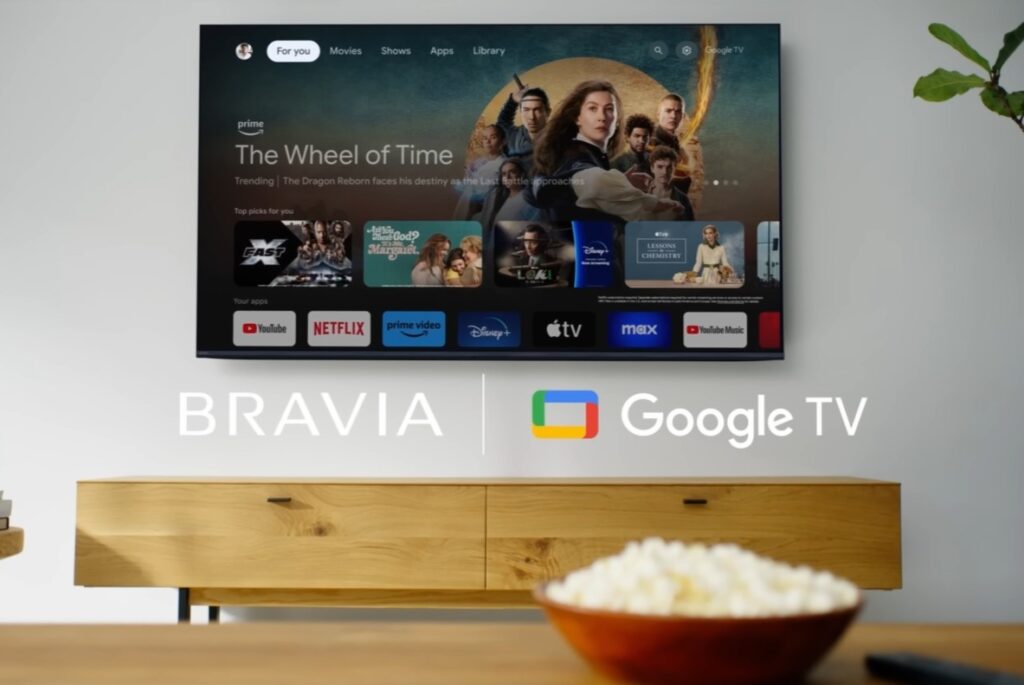
| Smart platform | Google TV | Familiar Sony smart TV environment with Google ecosystem benefits |
Menu names may vary by region or firmware.
If the all-four HDMI 2.1 implementation remains consistent across final retail units, that alone makes Bravia 3 II a far more convenient TV than a lot of similarly positioned rivals.
Picture quality: what should buyers expect?
It is important not to overcorrect into hype.
Bravia 3 II is still an LCD TV in Sony’s lower-to-mid structure. So this is not the model to buy if you want Sony’s top backlight control, highest-end HDR punch, or the kind of image authority that makes flagship Mini-LED and OLED TVs feel effortless.
But Sony’s strength has often been less about “biggest spec number” and more about presentation that looks natural, stable, and watchable with mixed content. That is why Bravia 3 II matters. It does not need to become a flagship killer to be a useful product. It just needs to become a smarter mainstream Sony.
And from what is confirmed so far, that appears to be exactly the role it is trying to fill.
Common mistakes buyers could make
Assuming Bravia 3 II is just a renamed budget TV
It is more than that. The 120Hz and HDMI story change the conversation.
Assuming Bravia 2 II is “basically the same”
It is not the same class of buyer decision.
Expecting flagship brightness or flagship contrast
That is not the point of this model.
Ignoring size as part of the value story
A 100-inch mid-tier Sony is more significant than it sounds.
Buying only on the Sony logo
The logo helps, but the reason to care here is the upgrade in practical features.
Who should buy Sony Bravia 3 II?
Buy it if…
You want a Sony TV that feels more serious than an entry model, you care about motion and gaming, and you want a safer all-rounder without moving into much more expensive Sony territory.
Skip it if…
You want premium HDR impact, stronger high-end dimming behavior, or the type of performance that usually pushes buyers toward Sony’s upper Mini-LED or OLED lines.
Pay special attention if…
You are shopping for 75-inch, 85-inch, or 100-inch sizes and want Sony reliability without immediately stepping into top-tier pricing.
Final Verdict
Sony Bravia 3 II explained comes down to one simple truth: this is the kind of launch that matters more in real living rooms than on social media.
It is not the loudest Sony TV of the year. It is not the glamorous one. It is not the one enthusiasts will obsess over first. But it may be the one that quietly solves a real buyer problem: how to get a more capable Sony TV with 120Hz, real gaming credibility, and big-screen options without turning every shopping decision into a premium-tier budget fight.
That is why Bravia 3 II matters more than Bravia 2 II. Bravia 2 II fills a space. Bravia 3 II creates one.
And in a market crowded with “good enough” televisions, that difference still means something. ✨