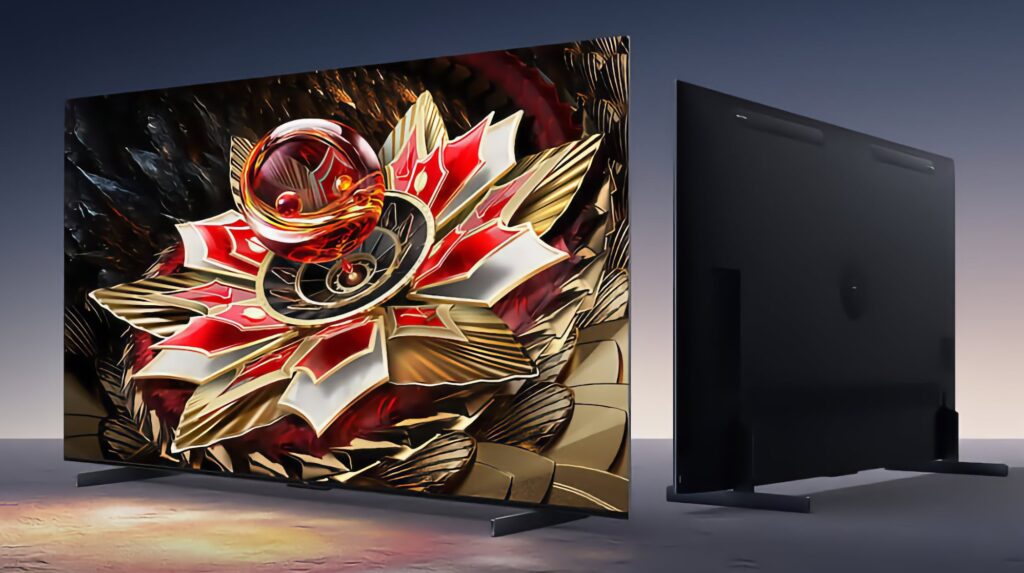

TCL CES 2026 TV lineup is all about one idea: push color coverage and peak brightness harder than classic Mini-LED, while keeping the product map clear enough that buyers can still choose quickly. TCL didn’t just show one “hero” TV — it outlined a two-track premium strategy (SQD-Mini LED at the top, RGB mini-LED just below), then backed it with mainstream QM-series updates.
📌 The important part: some models have detailed, publishable specs today (X11L, RM9L), while others are confirmed as announced but still spec-light (QM8L, QM7L, QM6L). This guide separates what’s real from what’s “wait for the final sheet.”
Quick Takeaways (CES-floor version)
- X11L is TCL’s 2026 flagship: SQD-Mini LED + extreme brightness and zone density (size-dependent).
- RM9L is TCL’s first big RGB mini-LED push in large sizes, with very specific brightness + zone claims already circulating.
- QM8L / QM7L are confirmed as the next-gen 8/7-series (successors), but final port/zone/size matrices are still incomplete.
- QM6L is confirmed as the budget mini-LED successor tier — expect value positioning, but don’t assume premium ports until final specs land.
TCL CES 2026 TV lineup: models announced (fast lineup map)
| Model (CES 2026) | Tier | Core tech (as positioned) | Confirmed sizes | What’s confirmed now | What’s still TBD |
|---|---|---|---|---|---|
| X11L | Flagship | SQD-Mini LED (“Super Quantum Dot” approach) | 75, 85, 98 (market timing may vary) | Peak brightness claim, zone-density claim (size-dependent), premium gaming positioning | Region-by-region SKU naming, exact panel variant by size, final ports list beyond HDMI headline |
| RM9L | Upper premium | RGB mini-LED | 85, 98, 115 | Peak brightness + BT.2020 claim, zone counts by size, high refresh positioning | Region naming (may differ), final picture modes behavior, final ports list beyond HDMI headline |
| QM8L | Premium | Mini-LED with “super” color messaging | TBA | Confirmed as successor tier (CES mention/positioning) | Sizes, zones, peak brightness, HDMI count, eARC placement |
| QM7L | Upper mid | Mini-LED successor tier | TBA | Confirmed as successor tier (CES mention/positioning) | Sizes, zones, refresh tiers, HDMI/eARC layout |
| QM6L | Value | Budget Mini-LED successor tier | TBA | Confirmed as budget mini-LED successor | Sizes, zones, peak brightness, HDMI 2.1 count, gaming features |
Menu names/paths vary by model/region/firmware. Specs can also vary by size and regional SKU, so treat CES claims as directional until retail sheets land.
What TCL announced at CES 2026 (what’s new, not hype)
At a high level, TCL used CES 2026 to draw a clearer line between:
- SQD-Mini LED (X11L) = TCL’s “flagship answer” to RGB backlights, aiming for huge gamut coverage with more traditional mini-LED structure.
- RGB mini-LED (RM9L) = positioned one step down from the flagship, but still a statement TV, especially in ultra-large sizes.
- QM-series updates (QM8L/QM7L/QM6L) = keep the mainstream ladder moving while TCL scales the “new color story” across cheaper tiers over time.
🔎 If you’re buying this year, the practical question is simple: Do you want the most extreme flagship, or the biggest screen per euro/dollar without dropping to a non-premium tier? That’s where X11L vs RM9L becomes the real fork.
TCL CES 2026 TV lineup: naming and regions (how not to get confused)
TCL naming can shift by region and retail channel. CES coverage often uses North America names first, while Europe may present equivalent families under different series labels.
What to do as a buyer:
- Treat the model family as the key (X11L / RM9L / QM8L / QM7L / QM6L).
- When the TV lands in your country, confirm the exact SKU on:
- the box label
- the TV’s About/System page
- the retailer’s spec sheet PDF
- Assume ports and tuners are the most likely differences by region.
X11L: the flagship “SQD-Mini LED” statement
X11L is the cleanest “flagship pitch” TCL has made in years: extreme peak brightness claims, extreme zone-density claims, and a deliberate focus on wide color coverage.
What’s confirmed/positioned at CES 2026
- Peak brightness: up to 10,000 nits (claim, size-dependent).
- Local dimming zones: up to ~20,000+ (claim, size-dependent; the largest size is often quoted at the top end).
- Color: 100% BT.2020 is part of the messaging around the new color system (claim/positioning).
- Gaming headline: 4K 144Hz positioning and four HDMI 2.1 ports are widely reported.
- Platform: TCL’s CES messaging puts premium models on Google TV (not Android TV).
What to watch before you buy:
- “10,000 nits” is a peak highlight claim, not a promise for full-screen sustained brightness.
- Zone count can be real, but algorithm + panel uniformity decides whether blooming control looks “OLED-clean” or just “very good for LCD.”
RM9L: TCL’s RGB mini-LED move (and why it exists)
RM9L matters because it’s TCL saying: “Yes, we can do RGB mini-LED at massive sizes.”
What’s already specific (CES-level claims reported consistently)
- Sizes: 85, 98, 115 inches.
- Peak brightness claim: up to ~9,000 nits.
- Color claim: 100% BT.2020.
- Dimming zones (claimed by size): 8,736 (85″) / 11,520 (98″) / 16,848 (115″).
- Refresh positioning: 4K 144Hz is commonly cited, plus higher refresh at 1080p in some reporting.
- Platform: Google TV is widely reported for this tier.
- HDMI headline: four HDMI 2.1 is repeatedly stated in CES coverage.
Where RGB mini-LED can win in real life:
- Large, bright living rooms where you want huge saturation + punch without stepping into OLED price brackets at 98–115 inches.
🧩 Where it can lose:
- If tone mapping is aggressive out of the box, you’ll want a true “accurate mode” profile — and those details usually arrive when retail firmware stabilizes.
QM8L / QM7L / QM6L: confirmed as the next ladder, but still spec-light
TCL talked about the QM ladder at CES 2026 as part of the “more models” story, but most public-facing CES coverage still treats these as confirmed families with incomplete sheets.
Here’s what you should assume without inventing:
- They are successor tiers (new naming, new year).
- They are positioned as mini-LED TVs in the QM hierarchy (premium → mid → value).
- They are likely to ship with Google TV in many regions, but final platform and app availability can vary.
What you should not assume until TCL posts full sheets:
- exact HDMI 2.1 count,
- exact zone counts,
- exact peak brightness,
- exact size list,
- exact eARC port placement.
🎮 If you care about PS5 / Xbox / PC: for QM models, the smartest move is to wait until the official spec sheet confirms (1) HDMI 2.1 ports and (2) 4K120/VRR behavior.
Compatibility checklist (evergreen value — use this before buying)
This is the part that keeps paying off long after CES.
If you plan to game (console or PC)
- Confirm HDMI 2.1 count (don’t assume “all HDMI are 2.1”).
- Confirm 4K120 + VRR is supported on the ports you’ll actually use.
- Confirm your chain: console/PC → TV (direct), then eARC to AVR/soundbar.
If you plan to stream in premium HDR
- Confirm the HDR formats you care about (Dolby Vision family / HDR10+ family).
- Confirm your streaming device supports the same formats (Apple TV / Fire TV / Shield / console apps can differ).
If you plan to use a soundbar
- Confirm which HDMI port is eARC (this is the one detail that breaks setups the most).
- Confirm that your soundbar supports the audio formats you want and that the TV can pass them correctly.
Manufacturer claims vs rounded independent measurements (early CES reality check)
| Model | Manufacturer/brand claims (CES messaging) | Rounded independent measurements (accurate modes) |
|---|---|---|
| X11L | Up to 10,000 nits, up to 20,000+ zones, wide color coverage claims | TBA (no reliable production-sample measurement set yet; expect size + firmware variance) |
| RM9L | Up to ~9,000 nits, 100% BT.2020, zones vary by size | TBA (RGB backlight behavior can vary heavily with processing + panel variance) |
Important: when independent measurements arrive later, expect panel variance and firmware-driven changes to tone mapping, peak highlights, and ABL-like behavior.
Port-by-port I/O map (what we can confirm today, what to verify on retail units)
X11L — I/O map (CES-confirmed headlines + what to check)
| Port / feature | Status |
|---|---|
| HDMI total | 4 (reported) |
| HDMI 2.1 count | 4 (reported) |
| eARC | TBA (verify which HDMI port is labeled eARC on your unit) |
| USB | TBA (verify count + whether one is USB 3.x) |
| Optical | TBA |
| Ethernet | TBA |
| Wi-Fi / Bluetooth | Wi-Fi is reported (tier-level); verify Wi-Fi generation by region |
| Tuner | Region dependent (e.g., ATSC 3.0 in some markets) |
RM9L — I/O map (CES-confirmed headlines + what to check)
| Port / feature | Status |
|---|---|
| HDMI total | 4 (reported) |
| HDMI 2.1 count | 4 (reported) |
| eARC | TBA (confirm labeled eARC port) |
| USB / Optical / Ethernet | TBA |
| Wi-Fi / Bluetooth | Reported at tier level; verify by region |
QM8L / QM7L / QM6L — what to verify first (because specs are still incomplete)
- HDMI 2.1 count
- eARC port placement
- 4K120 + VRR behavior (and whether it’s limited by port choice)
- Peak brightness behavior in accurate modes (not store mode)
FAQ
1) What models are included in the TCL CES 2026 TV lineup?
The TCL CES 2026 TV lineup announced at the show centers on X11L, RM9L, and the next-step QM8L, QM7L, and QM6L family updates, with different tiers aimed at different buyers.
2) Which TCL CES 2026 model is the true flagship?
X11L is positioned as TCL’s flagship with SQD-Mini LED branding and the most extreme brightness/zone messaging.
3) Is RM9L “better” than X11L because it’s RGB mini-LED?
Not automatically. RGB can deliver impressive color behavior, but the final result depends on processing, panel behavior, and firmware. RM9L is positioned just below X11L — still premium, especially in huge sizes.
4) Do QM8L and QM7L have full specs published yet?
They’re confirmed as successor tiers at CES, but complete public spec sheets (sizes, zones, full port maps) are still limited. Treat early listings as preliminary until TCL publishes final details by region.
5) What’s the safest buying move if I care about gaming ports?
Wait for the official spec sheet that confirms HDMI 2.1 count, 4K120, VRR, and eARC placement for your exact regional SKU.
6) TCL CES 2026 TV lineup: which model should I wait for?
If you want “no-compromise TCL” and you can pay for it, wait for X11L retail availability in your region. If you want ultra-large + premium punch at a different tier, keep an eye on RM9L. If you want value, wait for QM6L final sheets and pricing.
7) Will these models behave the same in every country?
Not always. Ports, tuners, and even naming can vary by region and retailer, and firmware can change picture behavior over time.
Final Verdict
TCL CES 2026 TV lineup is a clear statement year: X11L is the flagship “all-in” SQD-Mini LED play, RM9L is the bold RGB mini-LED move for buyers who want size and color impact, and the QM ladder is TCL keeping the mainstream pipeline fresh.
📌 If you take one practical lesson from CES: buy the model family, then verify the exact regional SKU before you pay — especially ports, eARC placement, and gaming features. The best TCL is the one that fits your chain, not the one with the biggest number on a CES slide.